A Life Scout’s rejection letter doesn’t define him. Leadership, grit, and building something from nothing matter more than an Ivy League stamp.
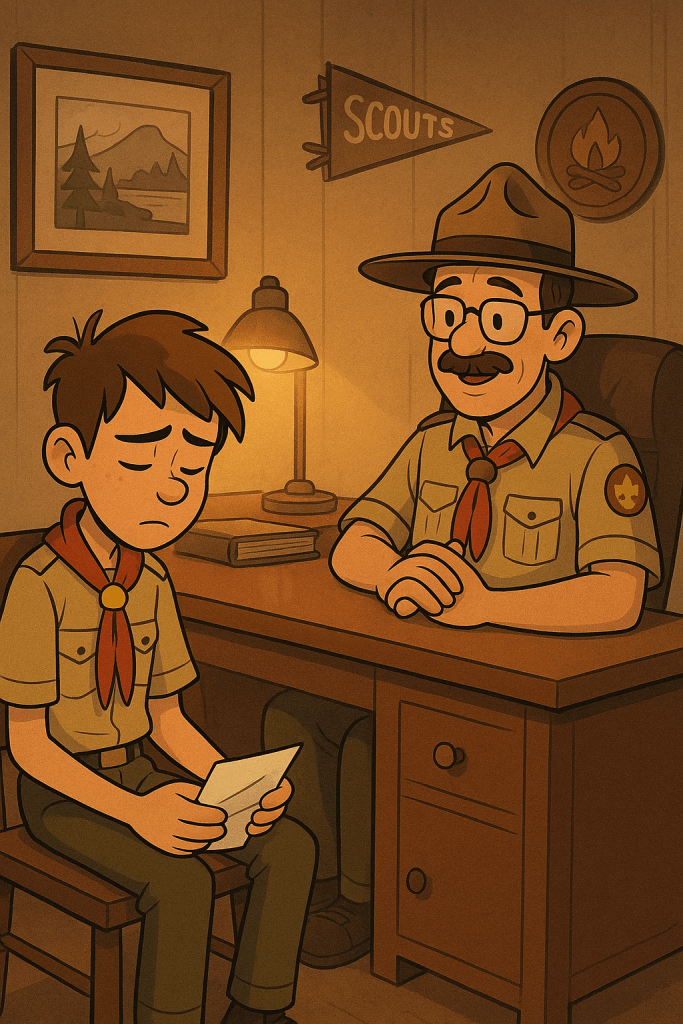
Scoutmaster Johnny Burnside flicked on the lights in his office. Tonight, the schedule was packed with Scoutmaster conferences, one after another. The troop had just wrapped up a Court of Honor, so the place was crawling with newly ranked up Life Scouts. Burnside had a rule: as soon as a Scout earned Life, he’d set up monthly one-on-ones. These meetings weren’t just about ticking boxes. They were about getting real.
He’d start by asking if they actually wanted to go for Eagle. You’d be surprised, he thought, at how many kids admit they’re only doing it to keep their parents off their backs. It was always a little sad, more than a little frustrating.
Next, he’d check in on their progress. He pushed his Scouts to earn Eagle early, so they could enjoy their last few months before eighteen without the pressure.
Last, he’d ask how he could help. He was proud of the trust they placed in him, he’d written more reference letters than he could count, and he was always happy to do it.
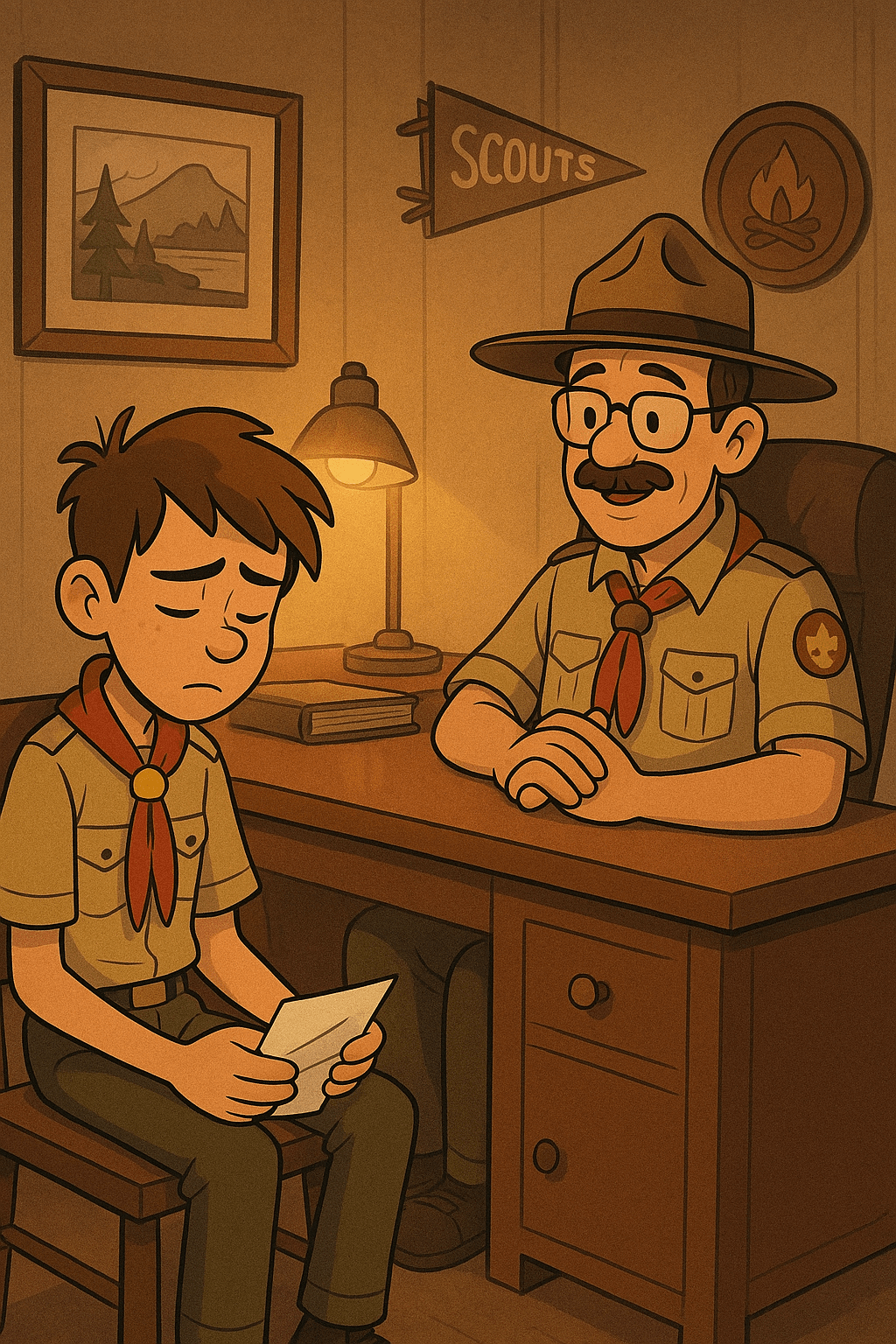
Tonight, Adam was on the docket. Life Scout for six months now. The kid was a great scout: always volunteered, always polite, smart a 4.0 student. But when Adam walked in and sat across from Burnside in the old vinyl chair, something felt off. The usual routine wasn’t going to cut it.
“Adam, you look down. What’s going on?” Burnside asked.
Adam’s voice barely carried across the desk. “I didn’t get in. Yale. I got the letter today. I didn’t make it. Yale said no.” Burnside remembered writing Adam a reference letter for his application.
Burnside wanted to say something wise, but all he could think about was the absurdity of it. Yale, the place that churns out senators, that prides itself on finding the next generation of leaders. And here was Adam, one of the most original, kindest kids he’d ever worked with, rejected by someone three thousand miles away that stamped “not enough” on his entire life.
Burnside leaned back. He’d seen boys upset before, over patrol elections, failed merit badges, missed requirements, but this was different. This cut deep.
“You know,” Burnside said, “I’ve been a scoutmaster longer than I care to admit. I’ve watched a lot of guys chase a lot of things, scholarships, badges, trophies. Most of the time, when they come up short, they get mad. They blame the world, or the competition, or themselves.”
Adam’s eyes were rimmed red. “Maybe I should have done more. Or been more, something. I failed.”
“Not a chance,” Burnside said. “You did something better. Do you remember what you did last Christmas?”
Adam looked confused. “No.”
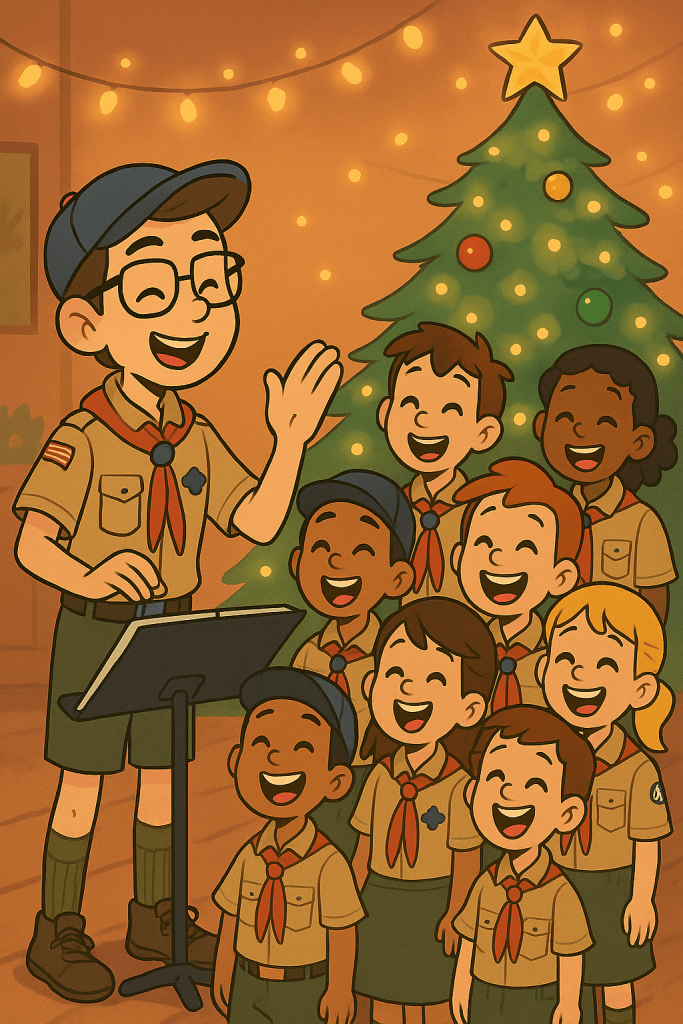
“At the Christmas tree lighting, you conducted the first-ever district Scout Choir. That was your idea. You came to me wanting to bring your love of music to the troop.”
“But that wasn’t for a rank advancement,” Adam said.
“Exactly.” Burnside pressed. “You did it because you loved it. You pitched the idea to me, the troop, the committee. You stood in front of everyone and made your case.”
“I thought they were going to laugh at me,” Adam admitted.
“But you did it anyway. That’s bravery. You promoted it for months, sent emails, put up flyers.”
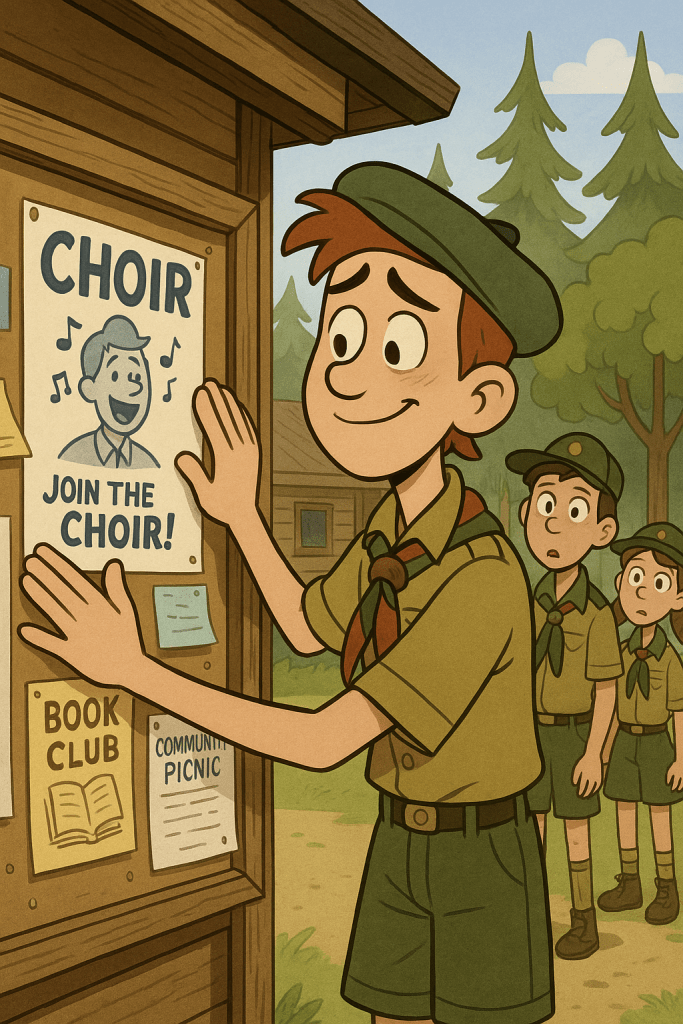
“I didn’t think anyone would join,” Adam said, finally laughing a little.
“But you convinced a dozen Scouts from different troops to come to rehearsals. They’d never sung together different backgrounds, different skill levels. You made it work.”
“It was rough,” Adam said, but there was a spark in his voice now.
“And by December, that choir performed at the community center’s Christmas tree lighting,” Burnside went on.
“We were so nervous,” Adam remembered. Burnside could feel the mood in the room lightening.
“That choir wouldn’t have existed without you,” Burnside said. “You made it happen. That’s an ambitious project.”
“A lot of parents said I wouldn’t pull it off.”
“And you proved them wrong. That choir might still be around after you’re gone. That’s a legacy.”
“I worked so hard,” Adam whispered.
And here he was, devastated because a stranger in New Haven thought he wasn’t Yale material.
“Adam,” Burnside said quietly, “Yale screwed up. Not you. None of your work was wasted. Do you really think a letter from Yale gets to decide your value? I’ll tell you what I see, I see a young man who built something from nothing. I see leadership. I see grit. I see a kid who turned an idea into a reality. Yale can’t measure that. But I can. And I’ll tell you now: you’ve already succeeded.”
Adam didn’t answer right away, but his shoulders straightened just a little.
“Maybe,” Adam said, half a smile creeping in, “they just don’t know what they missed.”
“Exactly,” Burnside said. “Someday, when you’re on a bigger stage than Yale ever offered, you’ll know, Yale didn’t reject you. You were just bigger than their box.”
Adam laughed, a small laugh, but real. For the first time that night, he believed in himself.
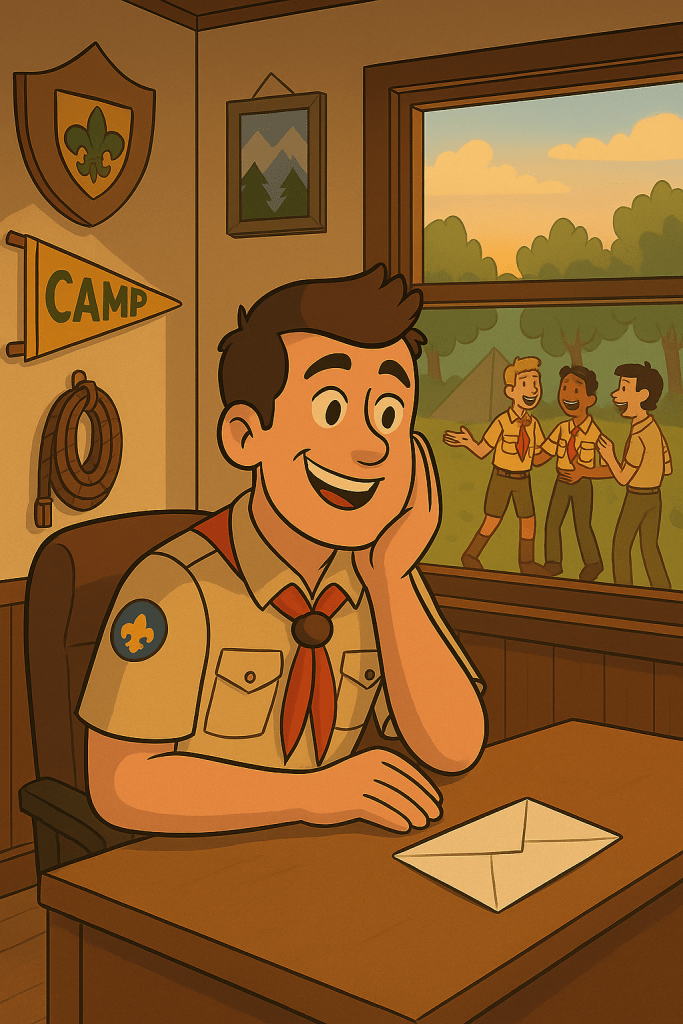
College admissions don’t define greatness. Yale didn’t make a mistake by saying no, Adam proved Yale wasn’t worthy of him.