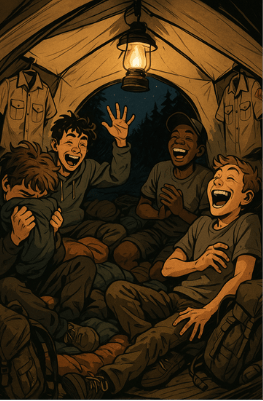
From DIY grit to standing up for the underdog, punk rock kids already live the Scout Law, just louder.

Parents don’t usually connect rebellion, norm questioning, and anti-authoritarianism with the Boy Scouts of America. But they should. Because the truth is, the kid who cranks The Clash, the Sex Pistols, or Green Day not only be the one who earns Eagle, but does it better than anyone else.
If you really want to meet a true Eagle Scout candidate who’s ready to lead, improvise, and stand up for others, you should look for the kid who grew up on punk rock. The ones who learned early that if you want change, you have to make it yourself. The ones who know how to speak up for the outsider. The ones who live by a code, just not the one you’re expecting.
Punk Kids Speak Up for Themselves
The essence of bands like The Clash and the Sex Pistols was rejecting passive acceptance of the status quo. It’s about not being “clamped down” by others’ expectations. A punk-influenced kid is less afraid to challenge an unsafe idea or a poorly planned project. They are practiced in speaking truth to power, even if it’s just respectfully telling a leader that a knot-tying method is inefficient. They are naturally inclined to be the first to raise their hand with a new, unconventional solution for an Eagle project because they embrace original thought. They learn to use their voice, a crucial skill for effective leadership in a patrol.
Scouting was never meant to be about blind obedience. But somewhere along the line, it turned into a line item on a resume for a college application. Scouting shouldn’t be about going through the book and checking off the boxes. That’s joining, not leading.
The best Scouts question the status quo, from leadership styles, to program execution to Eagle Scout projects. They think it through their way. “That’s how we’ve always done it.” doesn’t fly with them. That’s punk. A punk-minded Scout is the kid who isn’t afraid to tell the troop’s “model patrol” they’re full of it, or stand up to a toxic patrol leader when they cross the line.
An Eagle Scout candidate who’s comfortable raising his voice is also comfortable leading a project, organizing volunteers, or defending his ideas in front of a board of review. Punk isn’t silence, it’s speaking truth, loudly.
Punk Kids Value Independence
Every punk anthem is a call to action for self reliance. Similarly, scouting requires independence. A scout needs to plan their own path to Eagle, manage merit badges, lead service projects, and take responsibility for their mistakes. (Notice how I said a scout needs to plan, not mom and dad need to plan?)
The punk rock Scout is the one who isn’t afraid to try a new technique, invent a new way to cook ramen on a camp stove, or blaze their own trail. The question, rethink and reinvent. That kind of thinking doesn’t just earn badges. It creates leaders.
The Punk Ethos Embraces a “DIY” Mindset.
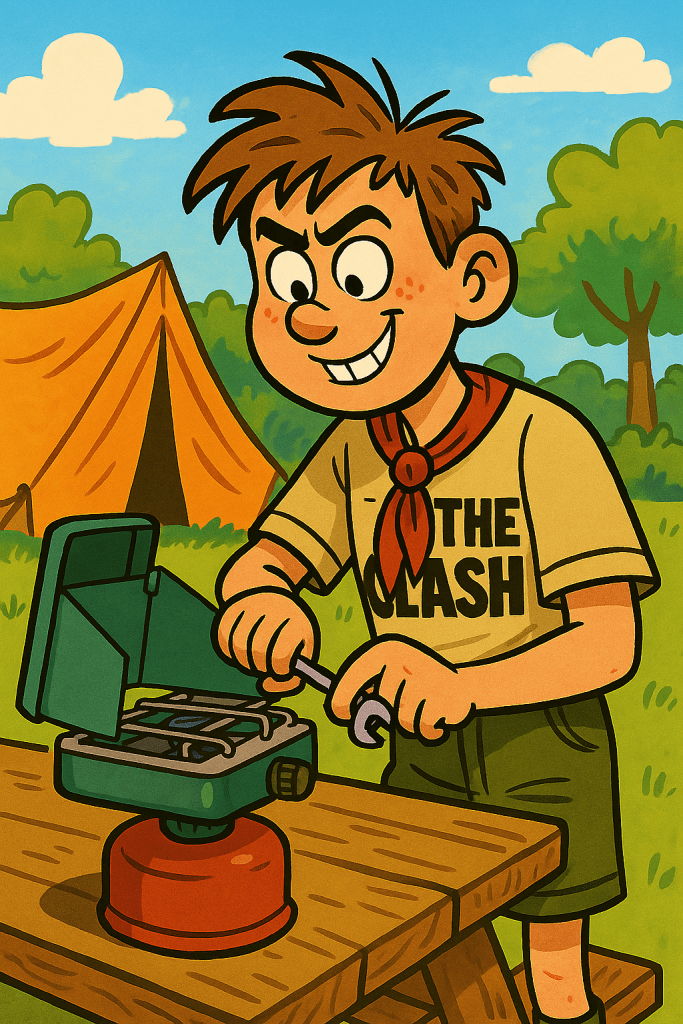
The Do-It-Yourself (DIY) ethic is the cornerstone of punk. Bands didn’t wait for a record label, they made their own, they booked their own tours, rallied their own community, printed their own flyers, and recorded their own music in basements. That’s is the ultimate lesson in resourcefulness and self-reliance required for leadership.
A kid who embraces that DIY spirit doesn’t wait for the Scoutmaster to hand them a map or a fire starter; they figure it out themselves. They have an innate drive to acquire skills and apply them immediately.
The embrace the principle: “Make your own life. If you want something done, learn how to do it yourself.” That’s survival-level independence.
Punk Kids Embrace Individuality

Uniforms may all look the same, but the Scouts inside them shouldn’t. Punk celebrates the “come as you are” call to action. It celebrates originality. And Scouting is stronger when every kid brings their quirks to the table, whether it’s the kid who sketches their own comic book, builds his own skateboards, or is obsessed with Star Trek, the original series.
The Eagle Scout who succeeds is never just a checkbox collector. He’s the one who figured out how to blend his individuality and that of his team into something useful for the whole troop.
The punk ethic of seeing the value in the “outlier” helps them spot hidden talents in their patrol members. This turns a collection of individuals into a team.
While punk scenes can have their own norms, the core message is inclusion for the excluded. It’s a refuge for those who don’t fit into mainstream culture. It’s about recognizing and valuing unique perspectives. This fosters a powerful sense of empathy and team cohesion.
These candidates are less likely to tolerate bullying or exclusion within the troop because they instinctively empathize with the “little guy” or the new, shy recruit.
They lead with tolerance and a broader worldview, understanding that the best teams are those composed of diverse personalities and skill sets.
Punk Kids Defend the Underdog
The heart of punk has always been standing up for the little guy, whether that’s fighting corporate greed, corrupt politics, or bullies in the schoolyard. In a troop, that translates into Scouts who refuse to let the quiet kid get steamrolled, or who make sure the weakest hiker doesn’t get left behind.
That sense of justice, of protecting the overlooked, is exactly what Eagle projects are supposed to do: make the world a little better, especially for people who can’t always fight for themselves.
The values taught by Joe Strummer, Billie Joe Armstrong, and Johnny Rotten of independence, action, empathy are simply The Scout Law applied in a different cultural context.
A great Eagle Scout isn’t defined by the style of music they listen to, but by the strength of the ethical principles they absorb from it.
So if I notice a kid in my troop has a playlist filled with The Clash, Sex Pistols, Stiff Little Fingers and Green Day, I’m not alarmed, I’m glad. That punk rock influence means they are developing their voice. They are embracing their independence, empathy, and individuality. That’s what it takes to thrive in scouting, and beyond.
The world doesn’t need more kids who can follow instructions. It needs more kids who can lead, rebel against injustice, and stand tall in their own skin. That’s what punk rock teaches. And that’s what Eagle Scouts should be all about.